EXECUTIVE SUMMARY & KEY SEARCH INTENT
This technical whitepaper examines the core operational advantages of hot melt adhesives (HMAs) in high-speed industrial assembly lines. Learn how EVA (Ethylene Vinyl Acetate) and Polyolefin (PO) matrices compare in thermal stability, viscosity cutoff, and open/set time dynamics to eliminate downtime and ensure ISO/REACH compliance.
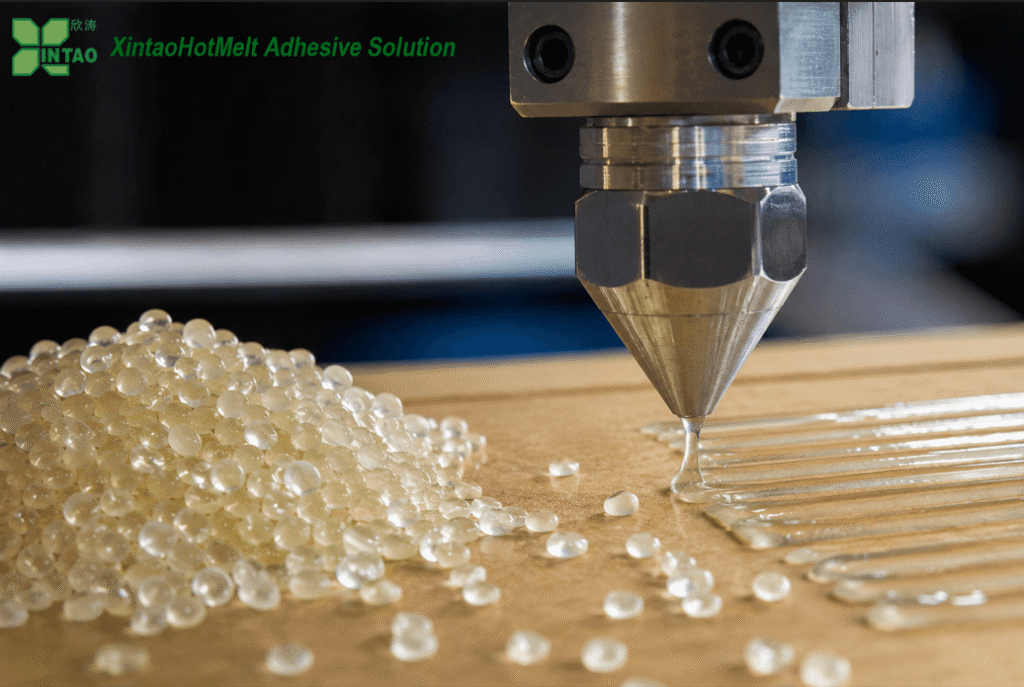
In modern high-volume manufacturing, selecting the correct bonding agent directly dictates overall line efficiency, cycle time, and joint reliability. Hot melt adhesives (HMAs) are 100% solid, solvent-free thermoplastic formulations that liquefy at elevated application temperatures and rapidly solidify upon cooling. Unlike solvent-based or water-based liquid adhesives, HMAs require zero extended drying channels or active chemical curing periods.
This immediate structural bonding capability enables seamless integration into automated, high-speed dispensing systems. Understanding the thermodynamic advantages of hot melt adhesives ensures optimal substrate compatibility, reduces thermal degradation, and prevents costly equipment downtime in continuous 24/7 manufacturing operations.
What Drives the Advantages of Hot Melt Adhesive in Automation?
Industrial automation demands strict operational predictability. When integrating industrial adhesives into automated dispensing systems, engineers carefully monitor specific thermodynamic behaviors to balance set speed, open time, and green strength:
- Instant Set Times: HMAs cool and form structural mechanical bonds within seconds, eliminating the need for bulky mechanical clamping or long curing lines.
- Zero Volatile Organic Compounds (VOCs): 100% solid compositions eliminate hazardous solvent evaporation, drastically improving interior facility air quality and meeting stringent OSHA worker safety regulations.
- High Gap-Filling Capacity: High-viscosity liquid states effectively bridge irregular surface tolerances and porous or uneven substrates.
- Indefinite Shelf Life: Solid thermoplastic blocks, pillows, and granules do not settle, degrade, or separate during extended warehouse storage.
Analyzing Matrix Materials: EVA vs. Polyolefin(PO)
Selecting the base polymer matrix is essential to prevent adhesive failure under fluctuating environmental temperatures and mechanical stresses. In industrial packaging and assembly, Ethylene Vinyl Acetate (EVA)and Polyolefin (PO) represent the two primary material categories.
| Performance Parameter | EVA Adhesives | Polyolefin (PO) Adhesives |
| Primary Applications | Standard corrugated packaging, bookbinding, paper products, general assembly | Precision air/oil filters, complex plastics (PP/PE), coated packaging, automotive trim |
| Temperature Resistance | -10°C to +60°C (Standard grade) | -30°C to +90°C+ (Superior thermal window) |
| Flexibility & Toughness | High flexibility; ideal for dynamic joints and flexible book spines | High structural integrity with superior low- temperature cold-crack resistance |
| Odor & Volatiles | Mild characteristic odor | Virtually odorless; low fogging potential |
| Mileage & Density | Standard density (~0.96 – 0.98 g/cm³) | Lower density (~0.88 – 0.90 g/cm³), yielding up to 15-20% higher mileage per kg |
Engineering Pro-Tip: While EVA adhesives remain the industry benchmark for standard packaging due to cost versatility, Polyolefin (PO) formulations offer significantly higher oxidation resistance. PO adhesives prevent nozzle carbonization, reduce filter replacement frequency by up to 60%, and deliver lower density for lighter application weight.
High-Speed Applications in Bookbinding & Packaging Automation
The physical demands of publishing logistics and automated packaging lines require highly engineered hot melt rheology:
Commercial Bookbinding & Graphic Arts:Achieving high page-pull strength is essential for heavy coated stock and art paper. Specialized EVA and PO formulations prevent page shedding without spine cracking. Anti-yellowing formulations resist high melt-tank temperatures, maintaining aesthetic spine integrity and clean trimming.
High-Speed Packaging & Case Sealing:Structural adhesives must withstand immediate pop-up memory on continuous high-speed cartoners. Fast-setting PO and EVA granules yield instant fiber-tearing bonds. XINTAO utilizes REACH and RoHS-compliant raw materials to satisfy international food-contact safety standards.
Thermal Limitations & Quality Testing Standards
Despite their high processing speed, thermoplastic adhesives have thermodynamic limits. Engineers must evaluate the softening point and shear heat-fail temperature relative to the product’s end-use thermal environment. If ambient temperatures exceed the adhesive’s softening point, structural creep or bond separation will occur.
To validate adhesive reliability before mass production rollout, quality inspection teams rely on established international testing frameworks:
- ASTM D4498: Standard test method for measuring the Heat-Fail Temperature in Shear of hot melt adhesives under static load.
- AST C M D3236: Standard test method for determining apparent viscosity at elevated application temperatures to optimize dispenser nozzle flow.
- ISO 9001 & REACH / RoHS Compliance: Guarantees strict batch-to-batch consistency, chemical safety, and strict absence of SVHC (Substances of Very High Concern).
 Substrate Evaluation & Troubleshooting Guidelines
Mismatched surface energy or incorrect open/set times lead to common line defects such as stringing, tailing, or cold joints. When bonding difficult materials—such as UV-varnished paperboards, PP/PE films, or metallic foils—laboratory substrate testing is critical.
FAQ
What is the technical between open time and set time?
Open time is the maximum time window available after dispensing to join two substrates while the adhesive retains sufficient tack. Set time is the duration required for the compressed joint to cool and form a load-bearing bond.
How do engineers prevent adhesive stringing or tailing on automated lines?
Stringing is typically caused by incorrect viscosity at the nozzle exit. It can be eliminated by raising application temperature by 5–10°C, selecting a polymer matrix with a sharper melt flow index, or optimizing nozzle air-assist cutoffs.
Are hot melt adhesives resistant to moisture and water?
Yes. Because they are polymer-based thermoplastics and contain absolutely no water or solvents, most HMAs provide excellent moisture and water resistance once fully solidified.
What causes hot melt adhesive to char in the melt tank?
Charring occurs when an adhesive remains at high temperatures for extended periods, causing thermal degradation of the polymer matrix. Switching to higher stability Polyolefin (PO) adhesives or lowering standby temperatures prevents this carbonization.
Choose XINTAO for Custom Hot Melt Formulation
XINTAO is a leading manufacturer of industrial hot melt adhesives, delivering high-performance bonding solutions for packaging, bookbinding, automotive, and filter manufacturing. Equipped with advanced CNAS-accredited testing facilities, our technical team formulates tailormade adhesives engineered for your specific substrates and line speeds.
Request Free Sample Kit & Substrate Test
Reference Sources
- ASTM D4498 – Standard Test Method for Heat-Fail Temperature in Shear of Hot Melt Adhesives.
- ASTM D3236 – Standard Test Method for Apparent Viscosity of Hot Melt Adhesives and Coating Materials.
- ECHA Guidelines – REACH & RoHS Compliance for Thermoplastic Adhesives in Automated Packaging.