Waterproofing systems rely heavily on precision-engineered polymer bonds to block moisture ingress. Industrial manufacturers utilize specific hot melt adhesive application methods for waterproofing to achieve uniform barrier layers. These thermoplastic adhesives cure instantly upon cooling.
This rapid setting time eliminates the need for drying ovens. It drastically accelerates continuous production speeds. Hot melt adhesives provide a void-free layer that effectively seals porous substrates against liquid penetration.
Engineers select formulations based on melt viscosity, open time, and environmental exposure. Understanding the correct coating technique is essential for achieving a reliable waterproof seal. Selecting the wrong method can lead to pinholes or delamination under environmental stress.
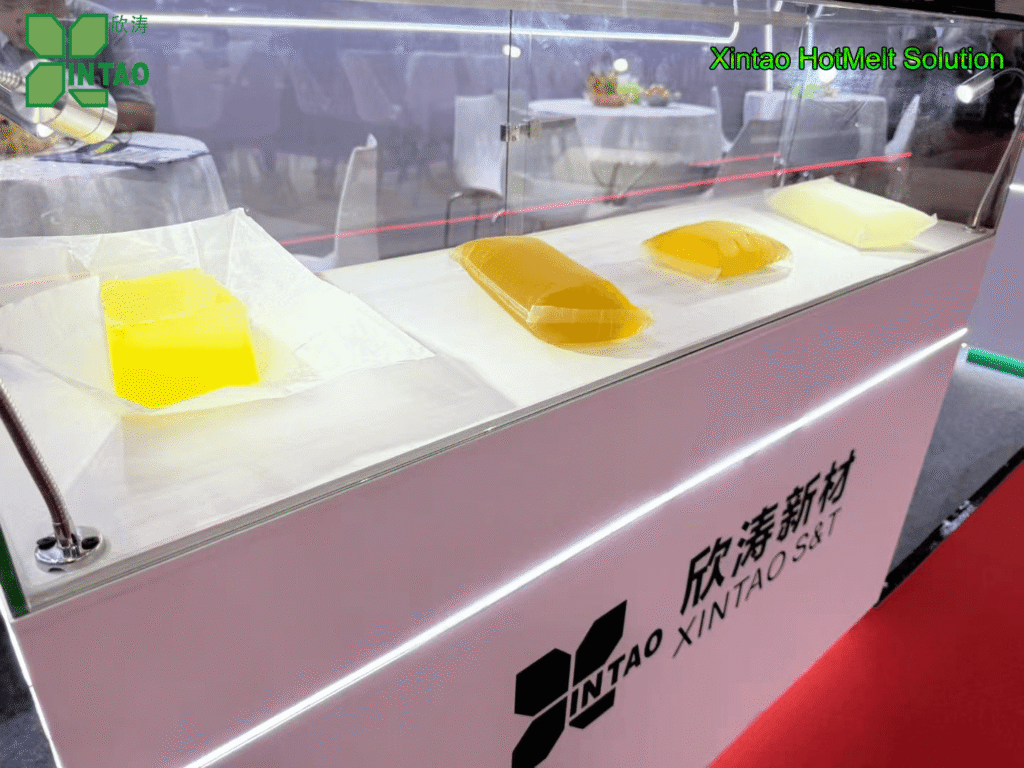
The Mechanics Behind Moisture-Resistant Adhesive Bonding
Thermoplastic polymers rely on physical interlocking and surface wetting to bond. The adhesive must reach an optimal melt viscosity before application. This ensures it flows seamlessly into the micro-textures of the base material.
Rapid cooling locks the polymer chains in place. This phase change prevents the adhesive from bleeding completely through thin fabrics. Manufacturers carefully control ambient factory temperatures to maintain consistent cooling rates.
If the substrate surface energy is too low, wetting fails. Engineers often employ corona treatment to increase surface tension beforehand. This pre-treatment step guarantees the hot melt barrier anchors permanently to the substrate.
Hot Melt Adhesive Application Methods for Waterproofing
Selecting the right machinery determines the final coating weight and barrier effectiveness. Different manufacturing setups require distinct hot melt adhesive application methods for waterproofing. The most common industrial techniques include:
- Slot Die Coating: Extrudes a flat, continuous film of adhesive onto wide substrates. This method offers excellent thickness control for roofing membranes and heavy underlayments.
- Spray Application: Uses pressurized air to atomize the melted adhesive into a fibrous web. It is ideal for uneven surfaces, nonwovens, and breathable waterproof textiles.
- Roll Coating: Transfers adhesive from a heated reservoir via rotating cylindrical rollers. This approach easily handles high-volume continuous webs in flexible packaging production.
- Bead and Dot Extrusion: Applies thick lines or small dots for localized joint sealing. This technique works exceptionally well in automotive assemblies and appliance manufacturing.
Matching Material Science to Waterproofing Environments
Not all thermoplastic polymers behave the same under wet conditions. The base resin dictates the adhesive’s flexibility, temperature resistance, and hydrophobic nature. Manufacturers typically choose between three primary material families based on application requirements.
| Adhesive Type | Water Resistance | Thermal Stability | Ideal Industrial Application |
| Polyolefin (PO) | High | Excellent (Up to 180°C) | Outdoor construction, automotive |
| SBC (PSA) | Moderate | Good | Waterproof tapes, flexible joints |
| EVA | Moderate | Fair | Indoor sealing, basic packaging |
PO adhesives feature an amorphous polymer structure. This provides superior flexibility in sub-zero environments without cracking. Using Xintao’s Polyolefin (PO) Adhesives delivers high heat resistance and broad substrate compatibility for demanding outdoor applications.
SBC polymers contain synthetic rubber segments that provide immediate tack. They can stretch and recover, absorbing structural movements in building joints. Xintao’s SBC Hot Melt Adhesives conform well to shifting surfaces, making them perfect for pressure-sensitive waterproofing tapes.
Ethylene-Vinyl Acetate is highly versatile and cost-effective. A higher vinyl acetate content increases flexibility and bonding strength. Xintao’s EVA Hot Melt Adhesives provide rapid curing and reliable moisture blocking for indoor applications.
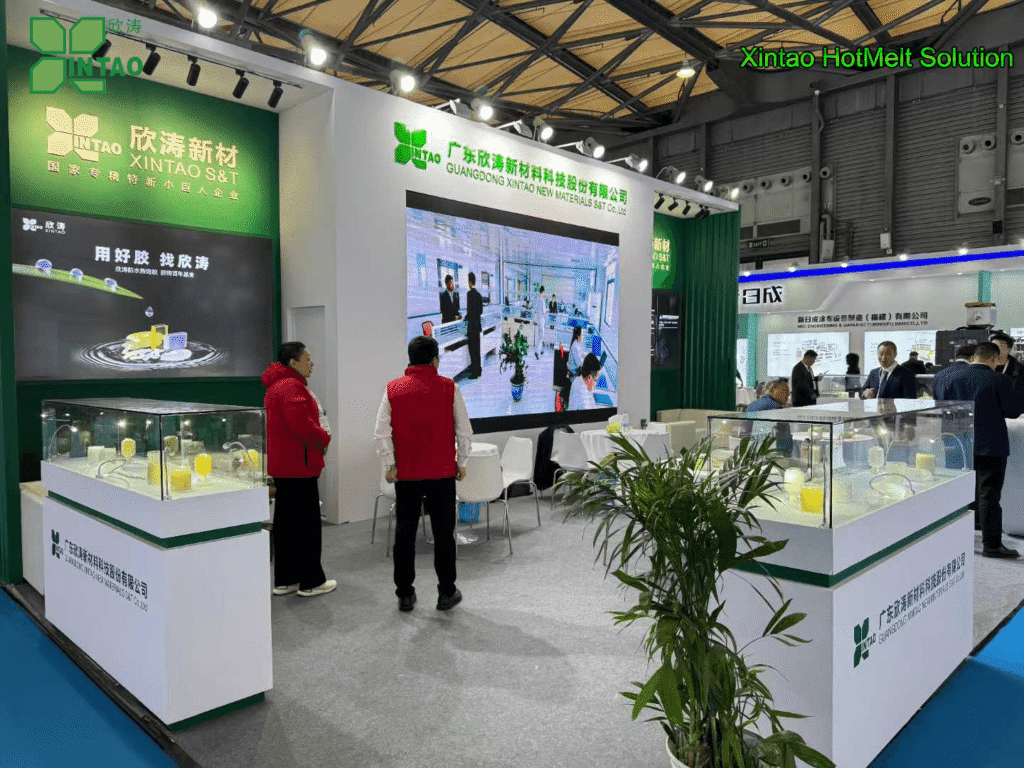
How to Choose Hot Melt Adhesive for Waterproof Membranes
Selecting the right hot melt adhesive for waterproof membranes requires careful consideration of substrate type, operating environment, and production requirements. The adhesive must provide strong initial bonding while maintaining long-term resistance to moisture, temperature changes, and mechanical stress.
For outdoor waterproofing systems, Polyolefin (PO) hot melt adhesives are often preferred due to their excellent heat resistance, flexibility, and durability in demanding environments. They are suitable for applications such as roofing membranes, construction materials, and automotive waterproof components where exposure to weather conditions is expected.
For flexible waterproof materials, including waterproof tapes and sealing joints, SBC hot melt adhesives offer excellent elasticity and pressure-sensitive properties. Their rubber-based structure allows the adhesive layer to accommodate movement and expansion between bonded surfaces.
EVA hot melt adhesives are commonly selected for indoor waterproof applications where cost efficiency, fast processing speed, and reliable moisture protection are important. They are widely used in packaging, nonwoven materials, and general industrial sealing applications.
When choosing a waterproof membrane adhesive, manufacturers should also evaluate coating method compatibility. Slot die coating requires adhesives with stable viscosity and consistent flow characteristics, while spray applications require controlled melt behavior to ensure uniform coverage. Proper adhesive selection helps prevent common issues such as delamination, uneven coating thickness, and moisture leakage.
Need help selecting the right adhesive grade?
Connect with Jenny on LinkedIn for real-time technical advice.
Process Control and Manufacturing Tolerances
Consistent waterproof performance requires strict adherence to operating parameters. Melt tanks must maintain a constant temperature profile. Cold spots in the reservoir cause viscosity spikes, leading to uneven coating weights.
In-line monitoring systems continuously measure the adhesive thickness during production. Optical sensors detect any pinholes or skips in the application layer. Defective sections are immediately flagged to prevent downstream quality failures.
If standard formulations do not meet specific line speeds, customized adhesives bridge the gap. Engineers adjust tackifiers and wax content to match exact substrate tensions. This ensures proper flow behavior and thermal constraints are met precisely.
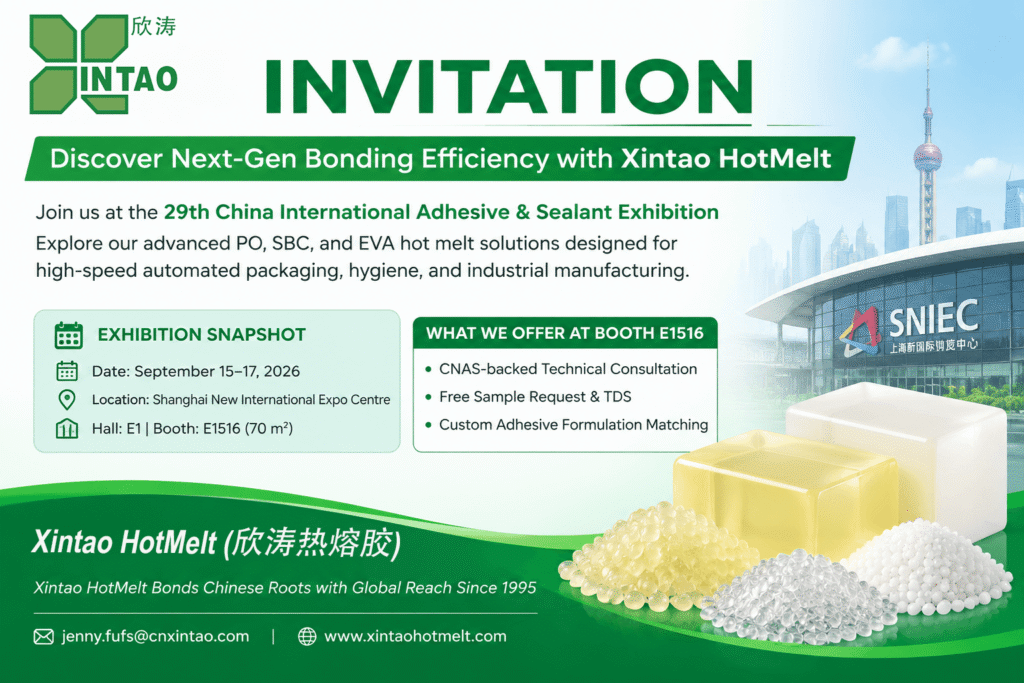
Xintao HotMelt at the 29th China International Adhesive & Sealant Exhibition
Xintao HotMelt, a professional hot melt adhesive manufacturer in China, will participate in the 29th China International Adhesive & Sealant Exhibition held in Shanghai from September 15–17, 2026.
At the exhibition, Xintao HotMelt will showcase its latest PO, SBC, and EVA hot melt adhesive solutions for applications including waterproof materials, nonwoven fabrics, packaging, and industrial assembly.
Visitors are welcome to meet the Xintao HotMelt team at Hall E1, Booth E1516, Shanghai New International Expo Centre (SNIEC), to discuss customized adhesive solutions and product requirements.le adhesive solutions. These innovations help manufacturers improve bonding efficiency and overall product performance.
FAQ
What makes hot melt adhesives waterproof?
Thermoplastic hot melt adhesives form continuous polymer films that reduce water penetration when properly applied. When applied correctly, they create a continuous barrier film without microscopic pinholes. This physical layer prevents water vapor from penetrating the underlying porous substrate.
How do engineers select the right application equipment?
Selection depends entirely on substrate width, line speed, and required coating thickness. Slot die extrusion is preferred for wide, flat membranes that need a uniform layer. Spraying is utilized for uneven fabrics where breathability is needed alongside basic water resistance.
How is moisture resistance tested in manufacturing?
Quality control teams often use standard protocols like ASTM E96. This measures the specific water vapor transmission rate of the bonded material. Peel adhesion tests also ensure moisture exposure does not cause premature delamination over time.
Does melt viscosity affect the waterproof barrier?
Yes. If the viscosity is too high, the adhesive will not wet out across the surface evenly. If it is too low, the liquid melt might absorb too deeply into the material. Both scenarios weaken the structural integrity of the waterproof seal.
Reference Sources
- ASTM D3330: Standard Test Method for Peel Adhesion of Pressure-Sensitive Tape.
- ASTM E96: Standard Test Methods for Water Vapor Transmission of Materials.
- ISO 9001:2015: Quality Management Systems in Industrial Adhesive Manufacturing and Process Control.
- Adhesion Society: Technical guidelines on thermoplastic polymer wetting and substrate surface energy.