Selecting the correct industrial adhesive goes beyond simple bonding. It directly impacts your production line speed, automated dispensing efficiency, and final product durability. Engineers must match the polymer base to specific substrate characteristics. Knowing how to choose hot melt adhesive requires analyzing open time, thermal stability, and wetting properties.
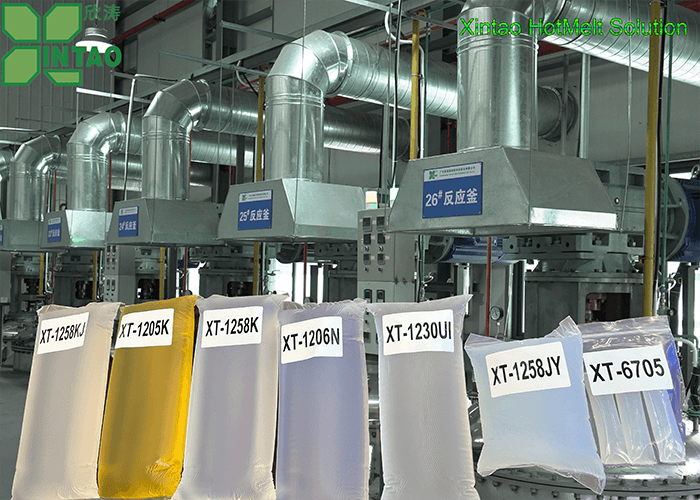
How Do Polymer Structures Impact Bonding Performance?
Hot melt adhesives rely on thermoplastic polymers that melt at elevated temperatures and cure upon cooling. This rapid phase change enables high-capacity automated production. The base polymer determines the adhesive’s fundamental mechanical properties.
Formulators add specific tackifying resins and waxes to the base polymer. These additives adjust the initial tackiness and modify the final setting speed. Modifying the chemical ratio allows manufacturers to customize the adhesive for unique industrial applications.
Comparing Core Adhesive Materials: EVA, PO, and SBC
Understanding material differences is essential when evaluating how to choose hot melt adhesive. Different formulations suit entirely different manufacturing environments.
- Ethylene Vinyl Acetate (EVA): EVA adhesives are highly versatile and cost-effective. They perform reliably for standard packaging, carton sealing, and bookbinding applications. These standard formulations typically operate between 160°C and 180°C.
- Polyolefin (PO): PO adhesives offer superior thermal stability and excellent chemical resistance. They resist charring in melting tanks and provide broader substrate compatibility. These are ideal for automotive assembly and challenging synthetic materials.
- Styrene Block Copolymers (SBC): SBC forms the chemical basis of pressure-sensitive adhesives (PSA). They remain permanently tacky even after fully cooling to room temperature. They are widely utilized in custom labels, industrial tapes, and hygiene products.
| Material Type | Melt Viscosity | Heat Resistance | Common Industry Applications |
| EVA | Medium | Moderate | Packaging, Mattress & Furniture Assembly, Bookbinding |
| Polyolefin (PO) | Low to Medium | High | Automotive, Non-wovens, Electronics |
| SBC (PSA) | High | Moderate | Labels, Tapes, Medical Devices |
Key Technical Specifications: Open Time, Melt Viscosity, and Thermal Stability
Industrial buyers must evaluate several technical metrics before approving a new formulation. Proper specification prevents costly production line downtimes.
- Open Time and Set Time: Open time dictates how long the adhesive remains workable before curing. Standard formulations offer 3 to 15 seconds of open time. Fast-setting variants can reduce this to 1-2 seconds for high-speed automated lines.
- Melt Viscosity: Viscosity affects how the liquid adhesive flows through heated hoses and nozzles. Typical ranges fall between 800 and 12,000 mPa·s. Lower viscosity prevents nozzle clogging in precise micro-dispensing equipment.
- Thermal Stability: Adhesives must withstand prolonged heating without chemical degradation. High thermal stability prevents carbonization and color changes inside the melt tank. Standard industrial testing evaluates sustained performance up to 180°C.
- Low-Temperature Resistance: Products exposed to cold environments require highly flexible polymers. Certain advanced formulations maintain their structural integrity down to -15°C. This prevents brittle cold-cracking during winter logistics and outdoor usage.
Substrate Wetting & Surface Energy: Bonding Low-Surface-Energy Plastics
Adhesive bonding relies heavily on the surface energy of the chosen materials. High surface energy substrates like metals and glass accept adhesives easily. Low surface energy materials like untreated polyethylene require specialized polymer blends.
Proper wetting occurs when the adhesive flows completely into microscopic surface irregularities. This precise mechanical interlocking creates a permanent, durable bond. Choosing the wrong melt viscosity prevents adequate surface penetration.
Engineers must match the adhesive’s surface tension directly to the substrate. Polyolefin formulations naturally wet out challenging plastics better than standard EVA. This targeted material matching often eliminates the need for expensive surface pretreatments.
Matching Adhesives to Industrial Application Scenarios
The operating environment heavily dictates the required chemical formulation. Material compatibility determines long-term product success.
- Automated Packaging Solutions: Carton sealing requires extremely fast setting speeds and strong structural bonds. EVA and PO formulations provide the necessary quick tack for high-speed folding.
- Hygiene and Medical Products: Diapers and medical tapes require skin-friendly, non-toxic formulations. SBC-based PSAs provide excellent initial peel strength and strict REACH compliance.
- Construction and Weather Sealing: Outdoor applications demand aggressive environmental resistance. For construction and weather-sealing applications where long-term moisture barrier is critical, high-performance polyolefin formulations—such as Xintao’s waterproofing series—ensure lasting bond durability under harsh outdoor conditions against harsh weather conditions. This ensures long-term durability against persistent moisture ingress.
How to Test and Replicate Adhesive Formulations
Relying on standardized testing ensures consistent manufacturing quality across batches. Engineers evaluate substrate tearing to mathematically confirm bond strength. A 100% substrate tear indicates the adhesive bond is stronger than the parent material.
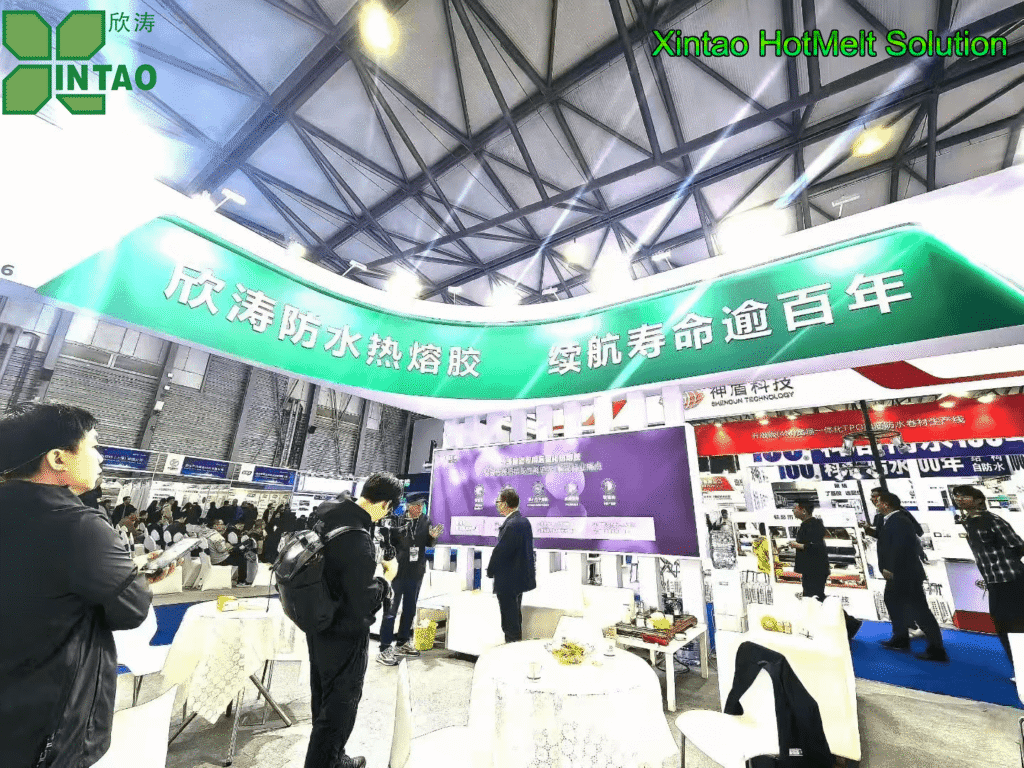
Many OEM manufacturing projects require custom technical parameter replication. When standard commercial models fall short, facilities analyze specific equipment types and melt temperatures. Xintao HotMelt provides formulation matching by testing substrates directly in their CNAS-certified center.
Physical samples undergo rigorous peel and shear testing according to global ASTM standards. Technical engineering teams then fine-tune the wetting agents and tackifiers. This systematic evaluation approach guarantees optimal compatibility with existing production lines.If you have any questions? Connect with Jenny on LinkedIn for real-time technical advice.
Need Technical Advice for Your Production Line?
Choosing the exact hot melt adhesive grade depends on your line speed, open time, and specific substrate requirements. Our application engineers are here to help you optimize formulation, reduce adhesive consumption, and eliminate equipment downtime.
Get Started with Xintao HotMelt:
Request Technical Consultation (Explore our CNAS lab testing capabilities & custom formulations)
Request Free Samples (Get product samples & TDS for your packaging or assembly line)
Follow Xintao Chemical on LinkedIn (Join our network for weekly engineering guides & factory updates)
FAQ
What is the difference between open time and set time?
Open time is the window when the adhesive remains sticky enough to make a bond. Set time is the duration required for the adhesive to cool and solidify completely. Choosing the right balance is crucial for optimizing automated assembly speeds.
How does substrate thickness affect bonding open time?
Thicker substrates act as active heat sinks during the bonding process. They draw thermal energy away from the applied adhesive very rapidly. This drastically reduces the functional open time available for component assembly.
Why do adhesives char or discolor in the melting tank?
Charring occurs when adhesives exceed their maximum thermal stability limits. Prolonged exposure to extreme high temperatures degrades the complex polymer chains. Maintaining strict temperature control and regular tank maintenance prevents this carbonization issue.
Can EVA and Polyolefin adhesives be mixed in the same tank?
Mixing different base polymers causes severe chemical incompatibility and phase separation. This immediately leads to degraded performance and clogged dispensing nozzles. Melting systems must be thoroughly purged before switching between different adhesive types.
What causes cohesive failure in bonded industrial materials?
Cohesive failure happens when the adhesive layer splits internally under mechanical stress. It indicates the applied load exceeded the polymer’s fundamental structural limits. Upgrading to a higher-shear-strength formulation typically resolves this specific engineering problem.
Reference Sources
- ASTM D4498-07(2015): Standard Test Method for Heat-Fail Temperature in Shear of Hot Melt Adhesives.
- ISO 4587:2003: Adhesives — Determination of tensile lap-shear strength of rigid-to-rigid bonded assemblies.
- ECHA (European Chemicals Agency): REACH Regulation compliance standards for industrial polymer formulations and non-toxic medical adhesives